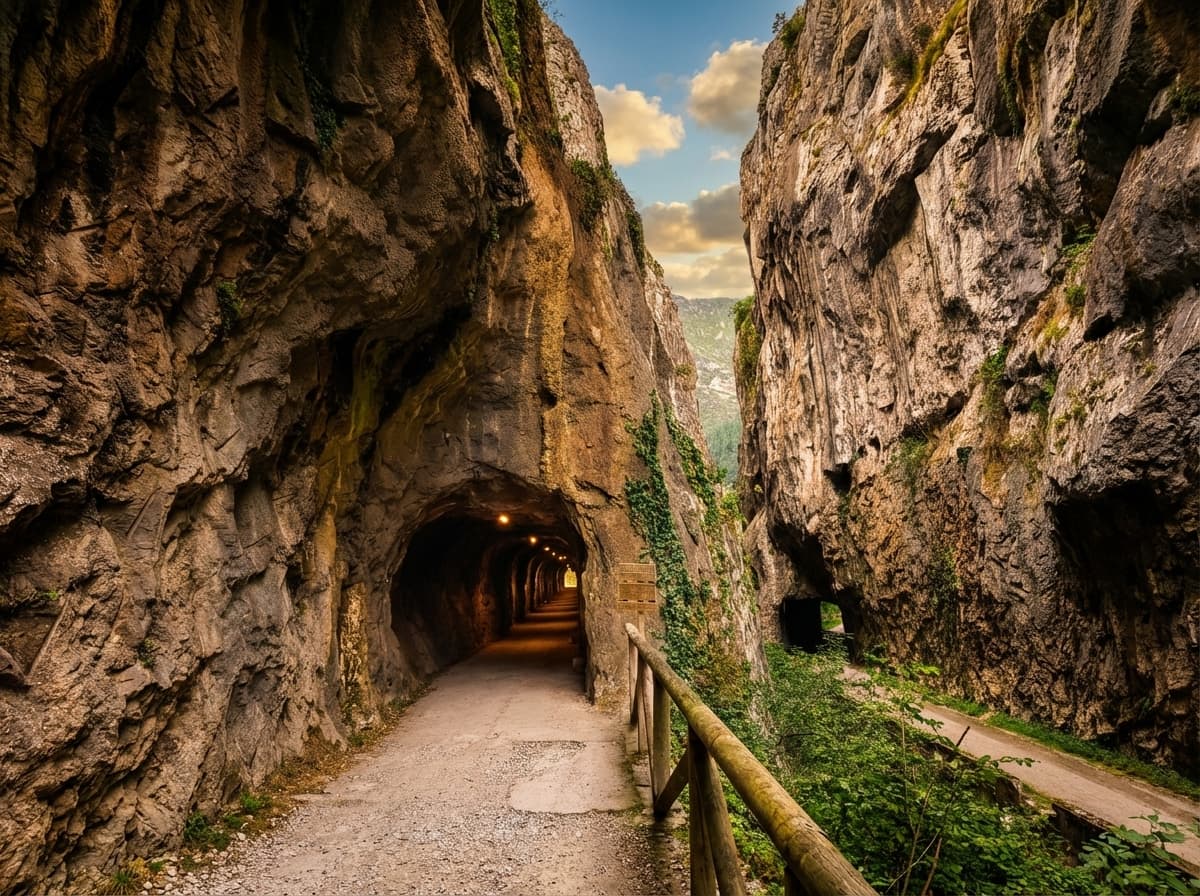
On the Senda del Oso the tarmac is the least of it: what you remember on the way home is the roe deer that crossed the meadow, the kite circling over the gorge and the beech forest ablaze in autumn. This guide is practical and gets straight to identification: what you will actually see while cycling, how to recognise it without being a naturalist, and when and where to look for it.
If you want the full picture of ecosystems and conservation, you have it in the nature guide to the Senda del Oso. Here we focus on what fits into a bike ride.
The golden rule: start early or stay until dusk
Most sightings happen at dawn and dusk. At midday the wildlife rests and hides. If your goal is to see animals, set off early or use the last hour of light, cycle slowly and quietly, and carry light binoculars: for raptors, river birds and Molina the bear they make all the difference.
Wildlife you will almost certainly see
Roe deer. The easiest of all. Small and slender, reddish brown in summer and greyish in winter, with a very visible white patch on the rump when it flees. It appears at the edge of meadows and in the transition between forest and pasture.
Raptors. Look at the open sky and you will see kites and buzzards drawing circles, and with luck the golden eagle. Over the Peñas Juntas and Valdecerezales gorges glide griffon vultures, unmistakable for their size and for circling almost without flapping.
River birds. Where the trail runs close to the Trubia or the Teverga, watch for the kingfisher (a flash of blue and orange at water level), the white-throated dipper (brown with a white bib, it dives into the current) and the grey wagtail (long tail and yellow underneath).
Wild boar and foxes. More nocturnal, but at nightfall or on quiet sections it is common to come across a wild boar (dark, stocky, almost always in a group) or a fox (reddish, with a long bushy tail tipped in white).
What you see with luck and patience
- Iberian otter: in the clean, quiet stretches of the river, at dawn. Discreet and fast, easier to sense from its tracks than to see.
- Red deer: higher up, in the hills. In September you hear the rut long before you see them.
- More elusive birds: the grey heron still on the bank, the goshawk among the trees and the tawny owl if you stay near the forest at nightfall.
What you almost never see, but is there
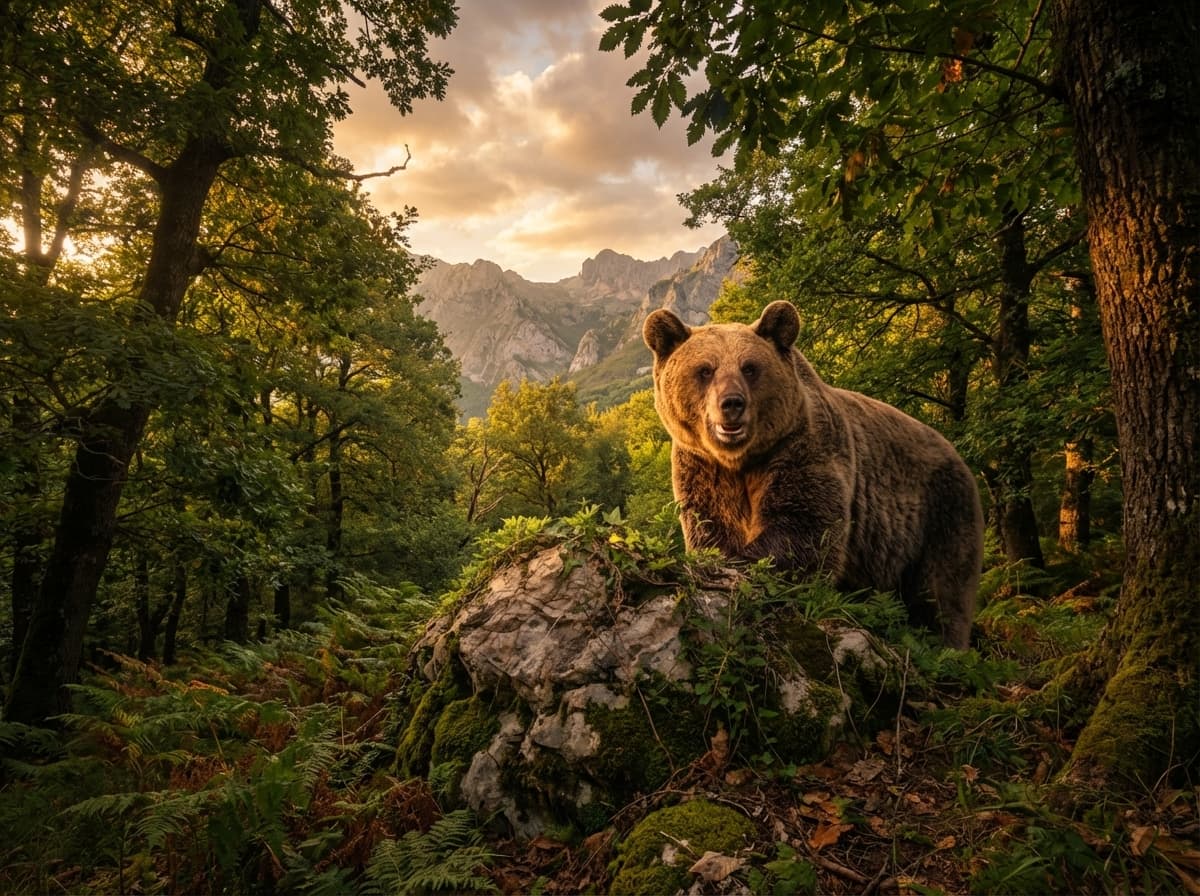
The trail crosses the habitat of the Cantabrian brown bear, the Iberian wolf, the capercaillie (critically endangered) and the bearded vulture. They are so elusive that seeing them from the bike is nearly impossible. The friendly exception is Molina, the bear living in semi-liberty in the Fernanchín enclosure in Proaza: there is a free viewpoint right next to the trail and the sighting is practically guaranteed during active hours. If bears fascinate you, you have their history and biology in the Cantabrian brown bear; to see one in the wild, head to Somiedo.
Flora you will recognise without being a botanist
Beech forests. The king tree of these valleys (Fagus sylvatica). Smooth grey trunk, dense canopy. Bright green in spring; in autumn, from mid-October to November, it glows in copper tones that are the best photo of the year. Especially spectacular in Quirós.
Oak and chestnut woods. In the lower areas oak dominates (sessile and pedunculate), mixed with chestnut trees, many of them centuries old.
Yews. The most venerable is the Bermiego Yew, in Quirós, between 1,500 and 2,000 years old and a listed Natural Monument. Well worth the short detour.
Flowers to look for in May and June. This is the floral peak: more than twenty species of endemic wild orchids, plus narcissus, gentians and irises in the meadows. In the gorges and damp corners, ferns add their primeval green.
A quick calendar of what to see
- Spring (April-June): the best time. Flora in bloom, active wildlife with newborns and beech forests in intense green. May and June are the peak.
- Summer (July-August): fewer daytime sightings because wildlife seeks shade. Cycle early and enjoy the cool of the tunnels.
- Autumn (September-November): copper beech forests, red deer rut in September and mushrooms. Unbeatable for photography.
- Winter (December-March): less active wildlife, but swollen rivers and snowy peaks in the background completely change the landscape.
Where to stop to see it best
- Fernanchín enclosure (Proaza): Molina the bear, with a free viewpoint right next to the trail. The guaranteed sighting of the trip.
- Valdemurio reservoir (Quirós): water birds and a good place to stop with binoculars.
- Peñas Juntas and Valdecerezales gorges: griffon vultures and walls with hanging vegetation.
- Las Xanas Gorge (Santo Adriano): done on foot, not by bike. Concentrated wild nature carved by the Viescas river.
- Bermiego Forest (Quirós): old oak woods and the thousand-year-old yew.
How to do it without disturbing the wildlife
Stay on signposted paths, do not feed any animal, keep the noise down (no loud music) and, if you bring a dog, keep it on a lead in wildlife areas. You are cycling through an ecological corridor, not an urban park.
And the logistics work in your favour: you rent the bike in Entrago, ride the trail down at your own pace stopping at every viewpoint and, when you finish in Buyera, we pick you up with the van and bring you back to Entrago. That way you spend the day watching the forest instead of pedalling back. You have the full route and map in the Senda del Oso guide.