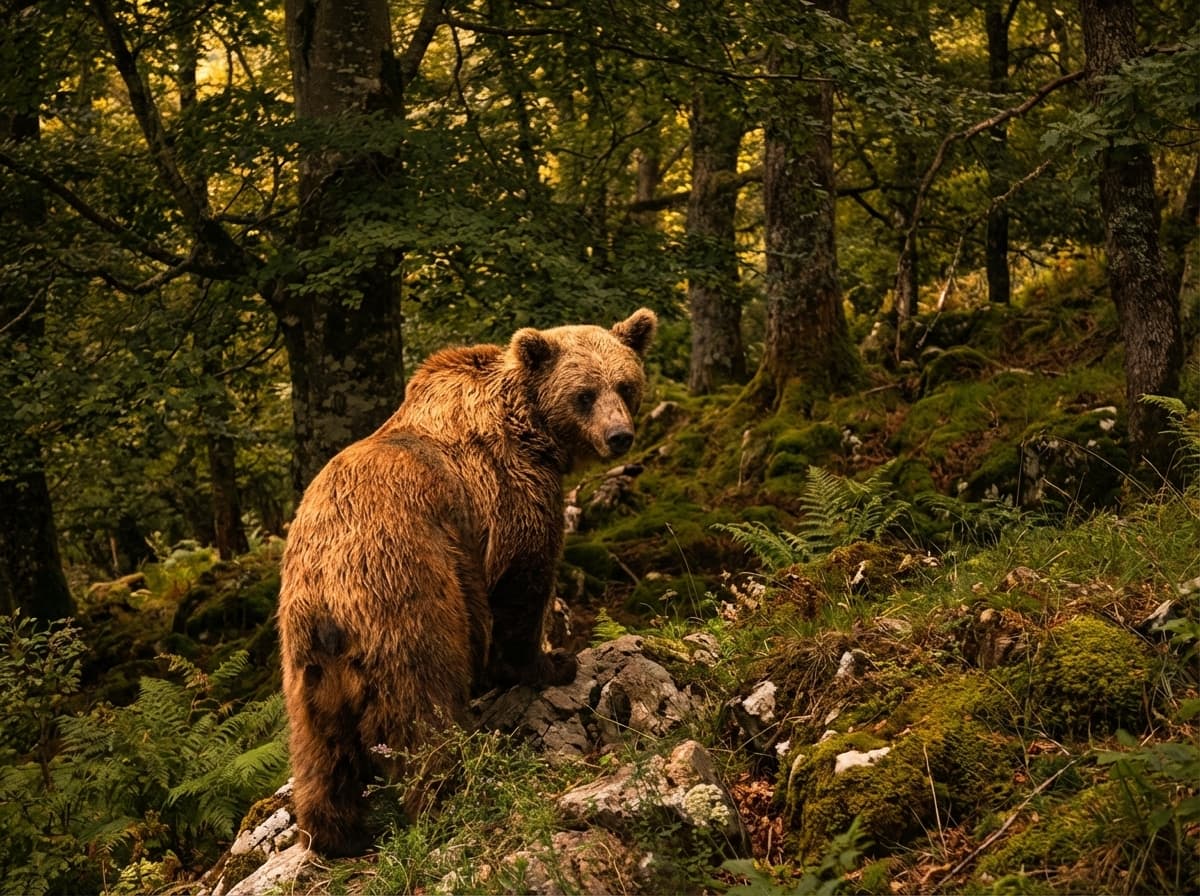
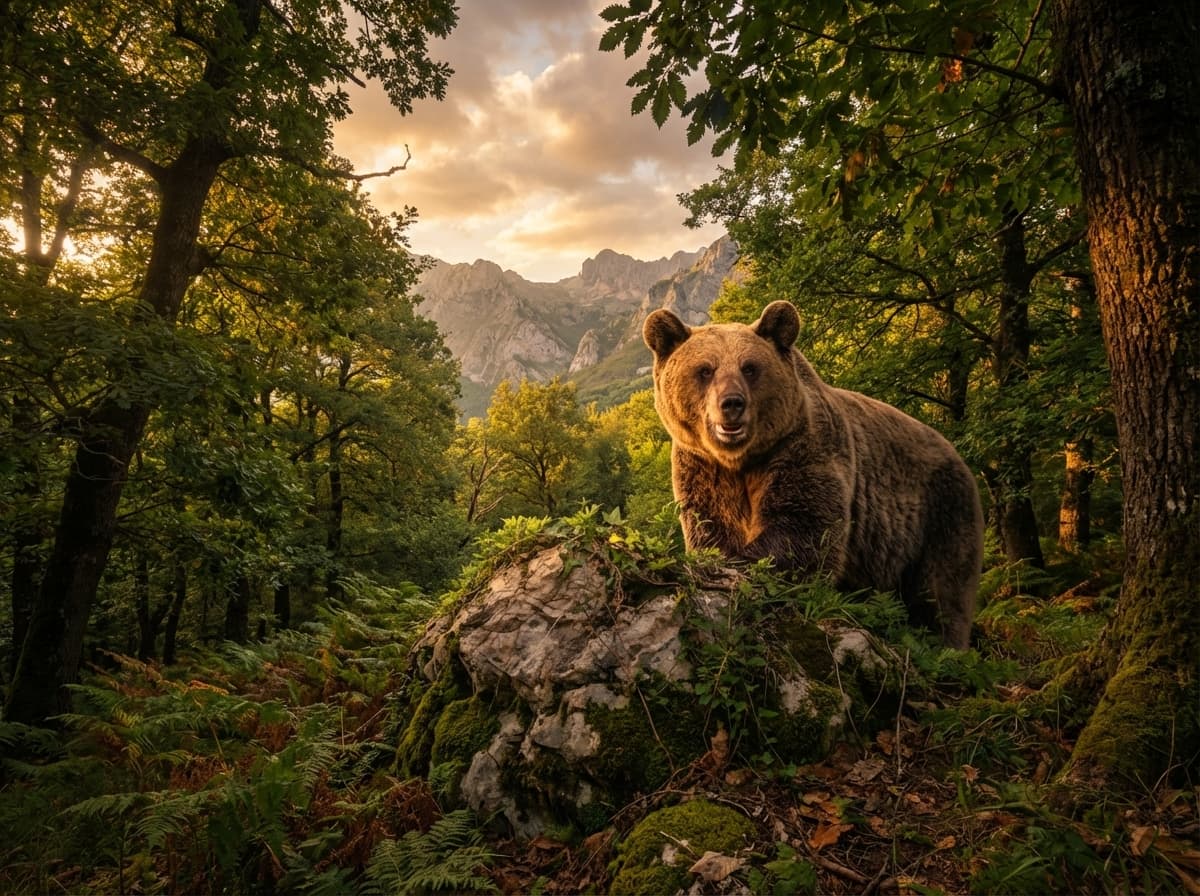
The Cantabrian brown bear (Ursus arctos arctos) is the subspecies of brown bear that inhabits the Cantabrian range, between Asturias, León, Cantabria and Galicia. It was almost extinct in the 1980s (fewer than 70 individuals) and today there are more than 350 thanks to a four-decade conservation programme. It is the symbol of the Proaza bear enclosure and of the Senda del Oso.
This guide covers the essentials about the species: what makes it different from other bears, where it lives, what it eats, how it recovered and how it behaves around humans.
What it is and what makes it different
Species: Ursus arctos (brown bear, the most widespread bear species in the northern hemisphere). Subspecies: Ursus arctos arctos, the European subspecies, present in Europe and parts of Asia. Cantabrian population: one of the two isolated brown bear populations in Spain (the other is the Pyrenean one, much smaller).
Physical data:
- Weight: females 85-180 kg, males 100-260 kg.
- Height on all fours: 70-100 cm at the back.
- Standing height: up to 1.90 m.
- Life expectancy: 20-30 years in the wild, up to 35 in semi-captivity (like the Proaza enclosure).
Differences with other bears:
- It is smaller than the North American grizzly (same species, different subspecies).
- It is not the polar bear (different species, Ursus maritimus).
- The Cantabrian population has been genetically isolated from the Pyrenean one for centuries.
Where the Cantabrian bear lives
Main habitat: forests of the Cantabrian range, at altitudes between 500 and 2,000 m. It prefers:
- Beech, oak and chestnut forests.
- Areas with plenty of forest fruit (acorns, chestnuts, blueberries, sloes).
- Valleys with little human presence.
Provinces with current presence:
- Asturias (largest concentration): the councils of Somiedo, Cangas del Narcea, Ibias, Teverga, Quirós.
- León: Babia, Laciana, Riaño.
- Cantabria: western area.
- Galicia (Lugo): Ancares, areas bordering León.
The highest density: Somiedo Natural Park and Muniellos.
What it eats (omnivorous, against popular belief)
The Cantabrian bear is omnivorous and opportunistic. Against the classic image of “aggressive hunter”, 80% of its diet is plant-based:
- Forest fruit: acorns, chestnuts, nuts, blueberries, blackberries, sloes, wild apples.
- Grass and roots: especially in spring.
- Wild honey: when it finds it.
- Insects: larvae, ants, bees.
- Small mammals and carrion: occasional, supplementary.
- Exceptionally: hunting deer or wild boar cubs, very rarely livestock (very isolated cases).
When it eats most: late summer and autumn. Hyperphagia: stockpiling reserves for the winter lethargy.
Behaviour and annual cycle
Spring (March-May): comes out of lethargy. Females with cubs come out last. It looks for fresh grass, carrion and insects.
Summer (June-August): maximum activity. It moves across wide territories. Raises and plays with the cubs.
Autumn (September-November): hyperphagia. Intensive feeding to build up fat.
Winter (December-February): lethargy (not technical hibernation: it may come out on mild days). Females give birth to cubs inside the den during this period.
Territoriality: males occupy territories of 150-200 km², females less.
How the species recovered (1980-today)
1980: the Cantabrian bear was on the brink of extinction. Fewer than 70 individuals spread across 2-3 isolated nuclei. Causes of the decline:
- Poaching (poisoned baits, traps).
- Habitat loss (felling, roads).
- Genetic isolation (populations too small).
1990-2000: creation of the Brown Bear Foundation (1992), declaration of the species in critical danger of extinction, reinforcement of the SEPRONA (Spanish wildlife police), active fight against poaching. In Asturias, the Asturian Bear Foundation was created, which manages the Fernanchín enclosure (where Paca and Tola lived).
2000-2020: the population starts to grow. By 2020 it is estimated to exceed 250 individuals.
Today (2026): +350 bears in the Cantabrian range. The species is still vulnerable but far from the 1980 abyss.
Current threats
Although things have improved a lot, the Cantabrian bear still faces risks:
- Residual poaching: poisoned baits and traps, although less than before.
- Roadkill: on roads crossing its territory. Several cases every year.
- Habitat loss: felling, badly located wind energy projects.
- Fragmentation: populations are still somewhat isolated from each other.
- Climate change: affects the availability of forest food.
The Brown Bear Foundation and the Asturian Bear Foundation continue to work actively on these fronts.
Is it dangerous for humans?
No, it is not aggressive by nature. It avoids human contact and almost always flees if it detects you before you detect it.
Risk situations (very unlikely):
- Surprise encounter with a female bear with cubs.
- Wounded or sick bear cornered.
- An animal fed by humans that has lost its natural fear.
Rules in bear country:
- Stay on marked paths.
- Make noise (talk, play music or carry bells) to warn.
- If you see a bear in the distance: minimum 200 m, retreat slowly.
- Never run (it triggers the chase instinct).
- Never approach cubs (the mother is always nearby).
Where to see it
In the wild:
- Somiedo Natural Park: the best area, especially at dawn and dusk in spring and autumn. With a specialised guide and binoculars. Read our complete guide to bear watching in Somiedo.
In semi-captivity:
- Fernanchín enclosure (Proaza): where Molina lives (rescued in 2013). Free access from the viewpoint right next to the Senda del Oso, free of charge. Part of the story of Paca, Tola and Molina.
Why this post matters
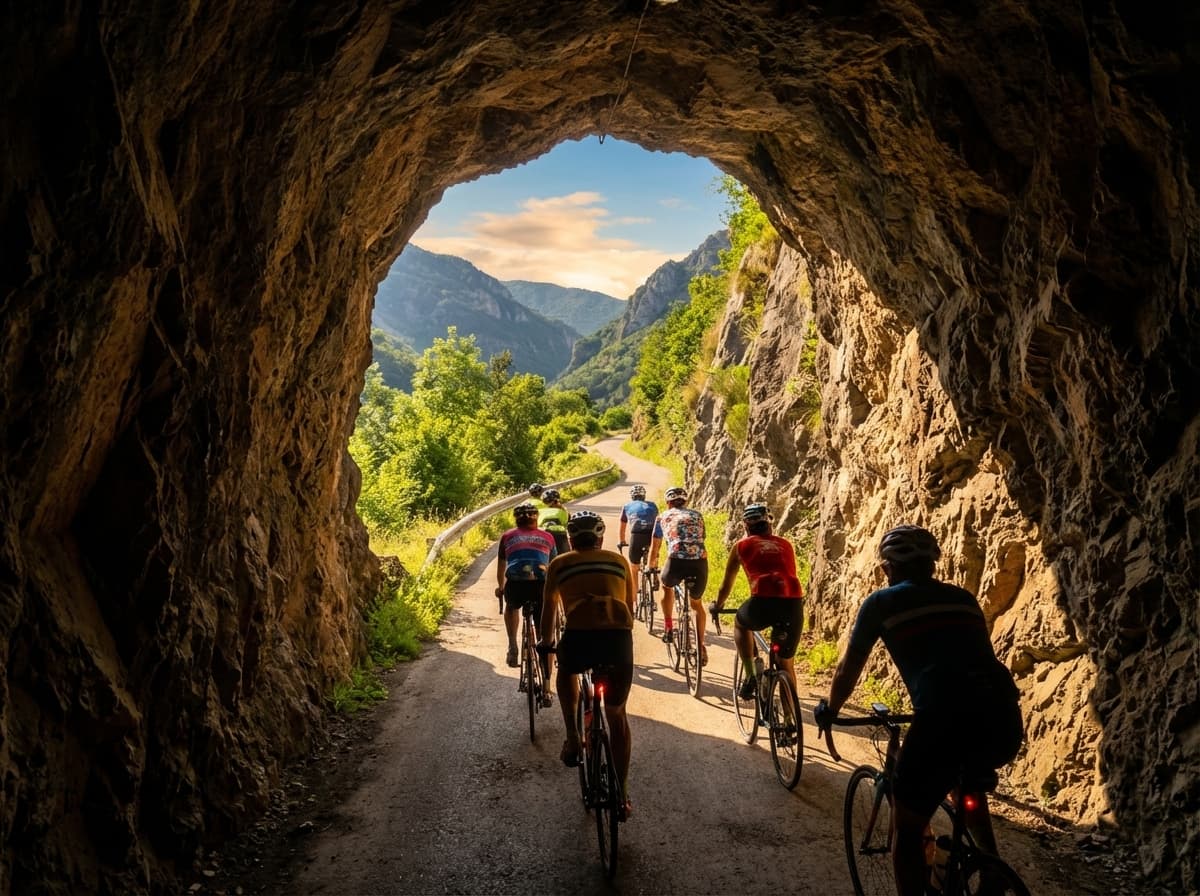
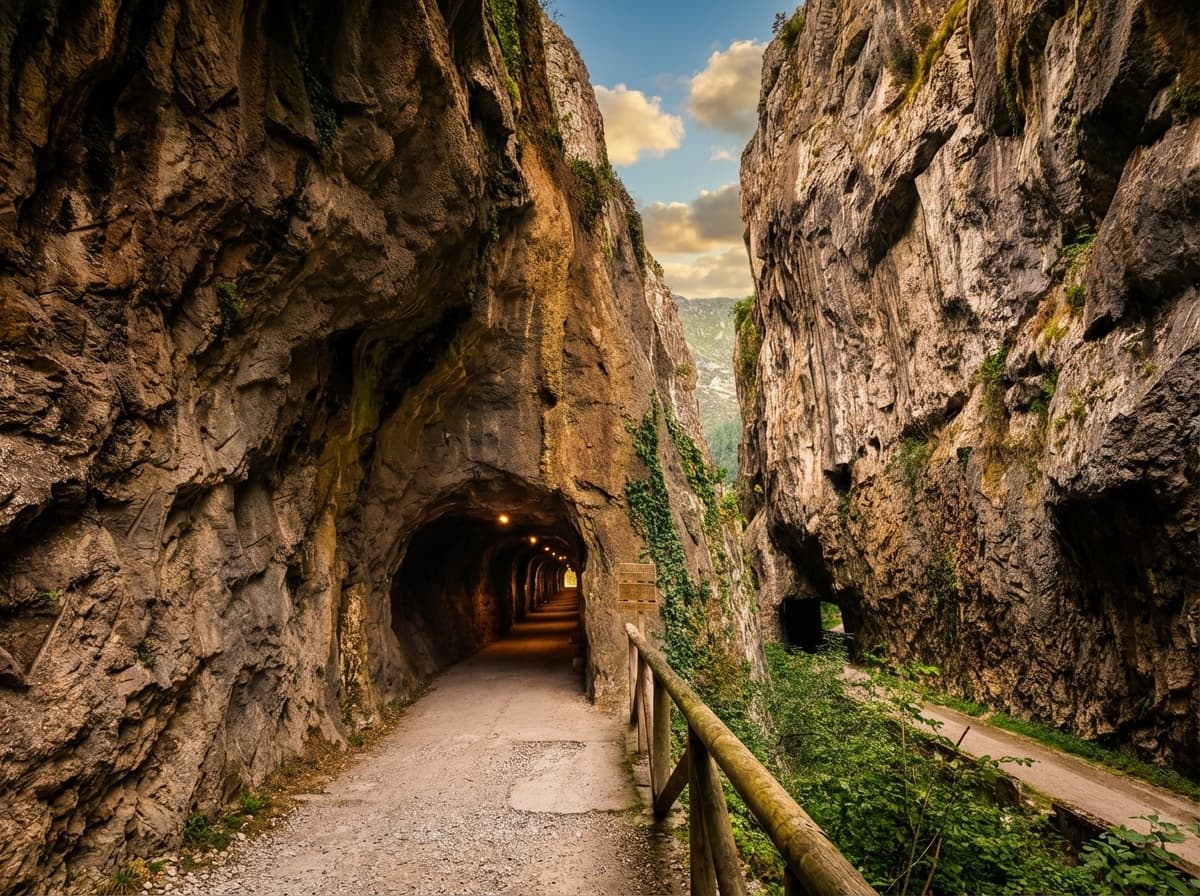
The Cantabrian brown bear isn’t just another zoological curiosity. It is one of the few European wildlife conservation success stories of recent decades: a species that came within 70 individuals of disappearing, and that today roams more than 5,000 km² of mountain range. Cycling the Senda del Oso means riding through the valleys where that recovery happened. Every bike rented in Entrago is a visitor who understands (or learns) why this animal deserves to keep existing.
If you come to the trail, stopping at the Fernanchín enclosure to see Molina is 30 minutes that changes the perspective of the whole day.