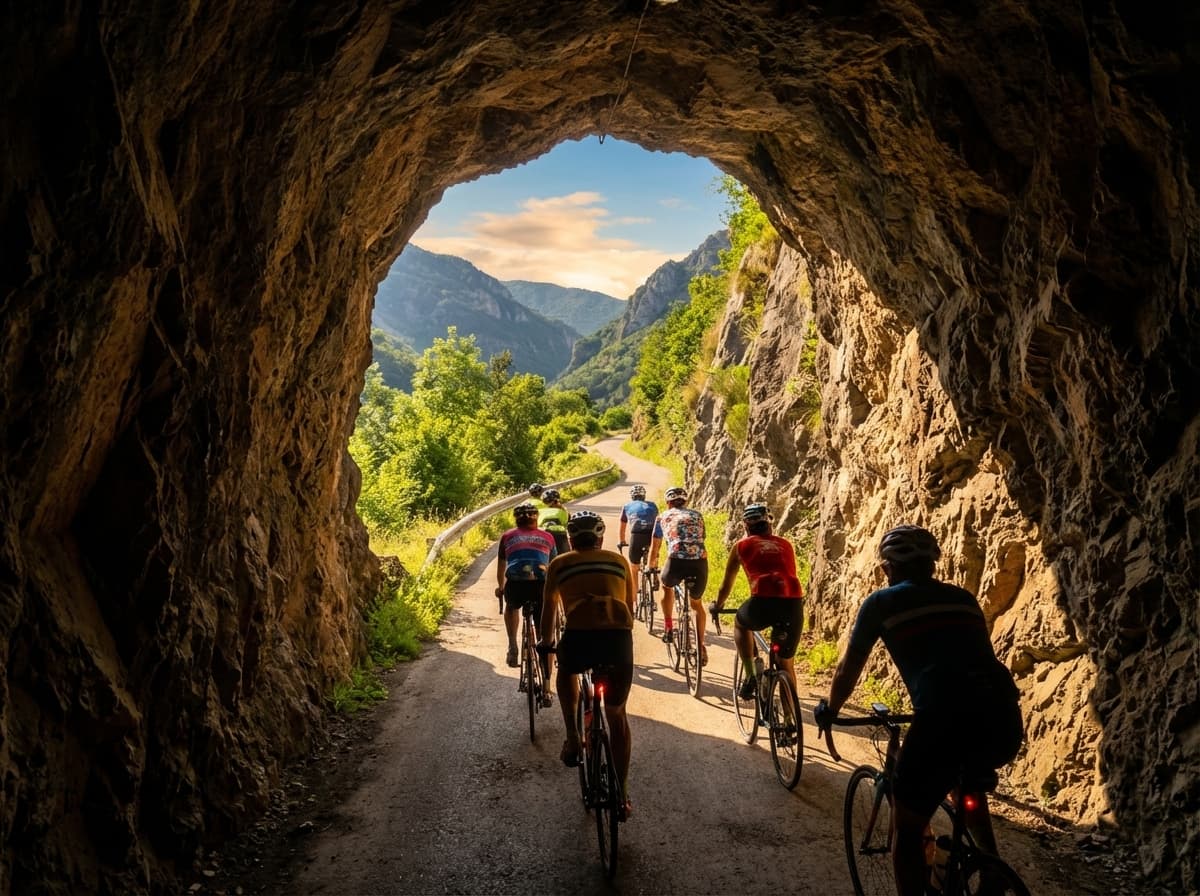
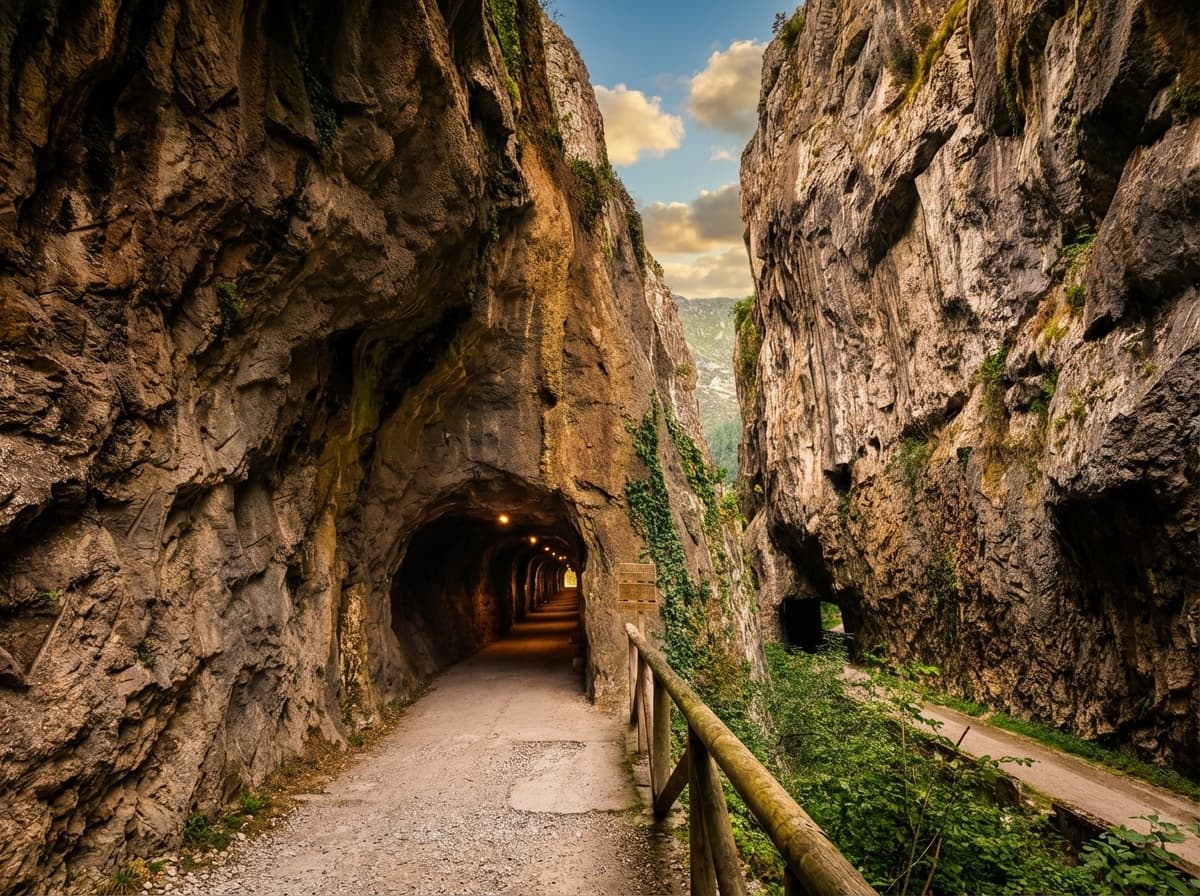
Cycling the Senda del Oso means crossing one of the richest ecological corridors in northern Spain. Under your wheels you have a greenway, but on both sides you live a mosaic of beech and oak forests, Cantabrian rivers, protected wildlife and a European conservation success story: the Cantabrian brown bear, which went from near-extinction to more than 350 wild individuals today.
This guide tells you which nature you will see, when, where to stop to see it better, and why this territory is what it is.
The Cantabrian brown bear: the protagonist
The bear that gives the trail its name is the Cantabrian brown bear (Ursus arctos arctos), Iberian subspecies of the European brown bear. It lives exclusively in the Cantabrian range between Asturias, León, Cantabria, Lugo and Palencia.
Key facts:
- Almost extinct in the 1980s: fewer than 70 individuals left in the wild.
- Today over 350 bears in the range. One of Europe’s great conservation successes.
- On the Senda del Oso, Molina lives in semi-liberty inside the Fernanchín enclosure (Proaza), heir to Paca and Tola.
- To see wild bears in the open, the place is Somiedo, 80 km from Entrago.
The Cantabrian brown bear is omnivorous, elusive and peaceful: it avoids contact with humans. Wild sightings require patience, binoculars and a guide. At the Proaza enclosure, spotting Molina is practically guaranteed.
Flora: the Atlantic forest at its best
The plant landscape along the trail is Atlantic forest: the dominant ecosystem of northern Iberia.
Dominant trees:
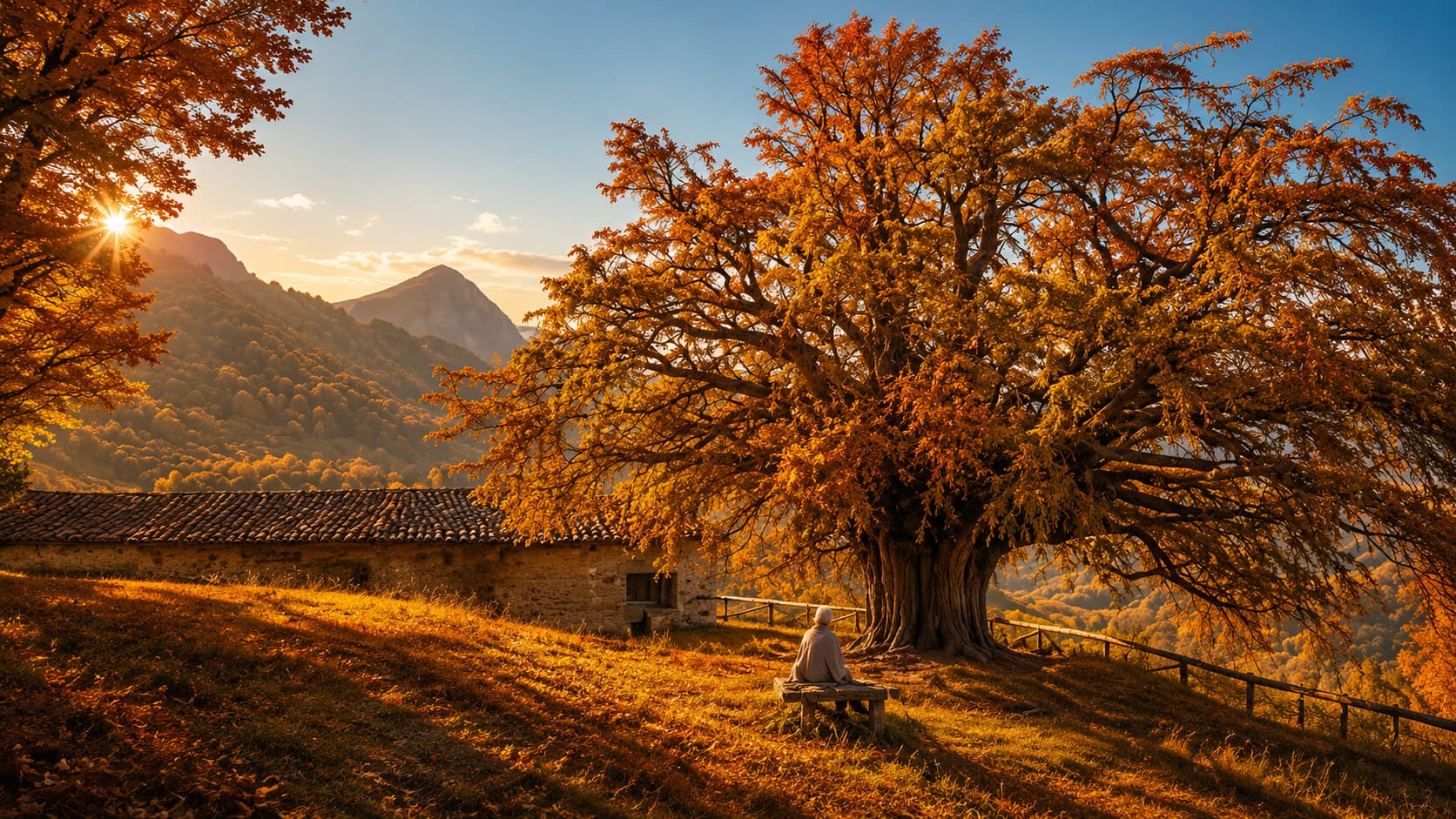
- Beech forests: the king. Dense beech stands (Fagus sylvatica), spectacular in autumn (October-November) with copper tones. Especially notable in Quirós.
- Oak forests: sessile oak and pedunculate oak. Mixed forests at lower altitudes.
- Chestnut trees: long-standing presence, many centuries old.
- Yews: the Bermiego Yew (Quirós) is between 1,500 and 2,000 years old and is a Natural Monument.
Protected flora:
- Endemic wild orchids: flowering between May and June. More than 20 different species across the trail councils.
- Cantabrian endemic plants: narcissus, gentians, irises. May-June.
- Ferns in gorges and damp areas: primeval vegetation.
Wildlife: what you can see and what takes more effort
There are three levels of sighting, depending on patience and luck:
What you see almost for sure
Cycling the trail at quiet times (dawn/dusk), it is common to see:
- Roe deer: common, often at the edge of meadows and forest-to-pasture transitions.
- Wild boar: abundant presence, especially at nightfall.
- Foxes: fairly frequent, especially in less-trafficked sections.
- Raptors: kites, buzzards and golden eagles are common in open skies. Griffon vultures soar over the gorges.
- River birds: kingfisher, white-throated dipper and grey wagtail at points where the trail crosses the Trubia or Teverga rivers.
What you see with luck and patience
- Iberian otter: lives in the clean rivers of the area. Sightings possible at dawn at the less-busy points of the Trubia.
- Red deer: growing presence, especially at higher altitudes. You hear them more than you see them (rut in September).
- Protected birds: grey heron, goshawk, tawny owl.
What you almost never see (but is there)
- Wild brown bear: extremely elusive. Better Somiedo.
- Iberian wolf: confirmed presence but elusive. Very occasional sightings.
- Capercaillie: critically endangered. Reduced populations in old-growth forests of the high pastures.
- Bearded vulture: occasional sightings in high skies.
The key spots to soak up nature
If you are going to do the trail and want to maximise contact with the surroundings, these are the must-stops:
Las Xanas Gorge (Santo Adriano): narrow canyon carved by the Viescas river with 80-metre vertical walls and hanging vegetation. Done on foot, not by bike, about 6-7 km return. Essential if you like wild nature. Take the bike to the start and lock it.
Las Ubiñas-La Mesa Natural Park (Teverga): UNESCO Biosphere Reserve. Habitat of brown bear, capercaillie, wolf and golden eagle. You cross it if you cycle to the southern end of the trail or if you do side excursions from Teverga.
Valdemurio Reservoir (near Proaza): bird watching spot for water birds. Swans, herons, ducks. Good place to stop for lunch outdoors with binoculars.
Bermiego Forest (Quirós): centuries-old oak woods and the Bermiego Yew. Separate visit by car or long bike ride.
Fernanchín Enclosure (Proaza): where Molina, the bear, lives. Free viewpoint right next to the trail. Sighting practically guaranteed during active hours.
When to go for more nature
- Spring (April-June): the best season. Flora in bloom, active wildlife with newborns, green beech forests, full rivers. May-June is the peak.
- Summer (July-August): beautiful, but warmer and with fewer daytime sightings (wildlife seeks shade). Better to cycle early.
- Autumn (September-November): copper beech forests, red deer rut in September, mushrooms. Magnificent for photography.
- Winter (December-March): less active wildlife (bears partially hibernate), but very different landscape, swollen rivers, snowy peaks in the background.
Time of day: dawn and dusk concentrate 80% of sightings. At midday wildlife rests.
Conservation: why this territory is what it is
The biodiversity of the trail is not by chance. It rests on four pillars:
- Brown bear protection: ecological corridors between the two subpopulations (western and eastern), barrier reduction, local education. The Asturian Bear Foundation manages the Proaza enclosure.
- Habitat restoration: reforestation with native species, riverbank protection, sustainable forest management. The old mining spoil tips have been turned into habitat for flora and fauna.
- Traditional farming and grazing: the landscape you see is shaped by centuries of low-intensity grazing and forestry. That coexistence is key to current biodiversity.
- Environmental education and responsible tourism: the Casa del Oso, interpretation centres and guided visits work to ensure that the rise in visitors does not damage the ecosystem.
Trail ethics
Basic rules so you don’t spoil what you came to see:
- Stay on signposted paths. The trail and its adjacent routes are defined for a reason: sensitive areas lie off them.
- Don’t feed wildlife. Not the roe deer, not the wild boars, not the otter. Human food = habituated animals = problems.
- Silence in sensitive areas. Especially at the bear enclosure and at wildlife observation points.
- No loose dogs in protected wildlife zones. If you bring your dog, keep it on a lead.
- Bicycle without loud music: you are cycling through an ecological corridor, not an urban park.
If you come just for the nature
My practical recommendation:
- Rent the bike in Entrago (us, no upfront payment).
- Cycle the full trail stopping at the bear enclosure (Casa del Oso) and, if you have time, at the Valdemurio reservoir.
- Dedicate half a day to Las Xanas (on foot).
- If you stay more days, add Somiedo (80 km) to see wild bears and the Las Ubiñas-La Mesa Park for high mountain.
It is one of the most complete nature itineraries in northern Spain, with the advantage of having everything within short distances and the trail itself as the backbone of the route.