The Senda del Oso crosses a territory with more than 1,000 years of visible history: 11th-century Romanesque, Paleolithic sites, manor architecture, modern museums on prehistory and conservation, and ancient trees. Cycling through here without knowing any of this is missing half the trip.
This guide takes you through the monuments, museums and traditional architecture corners worth stopping for, organised by council. All of them are within 15 minutes of the trail.
The 4 essential heritage stops
If you only have a day and want to see the most important pieces, these are them:
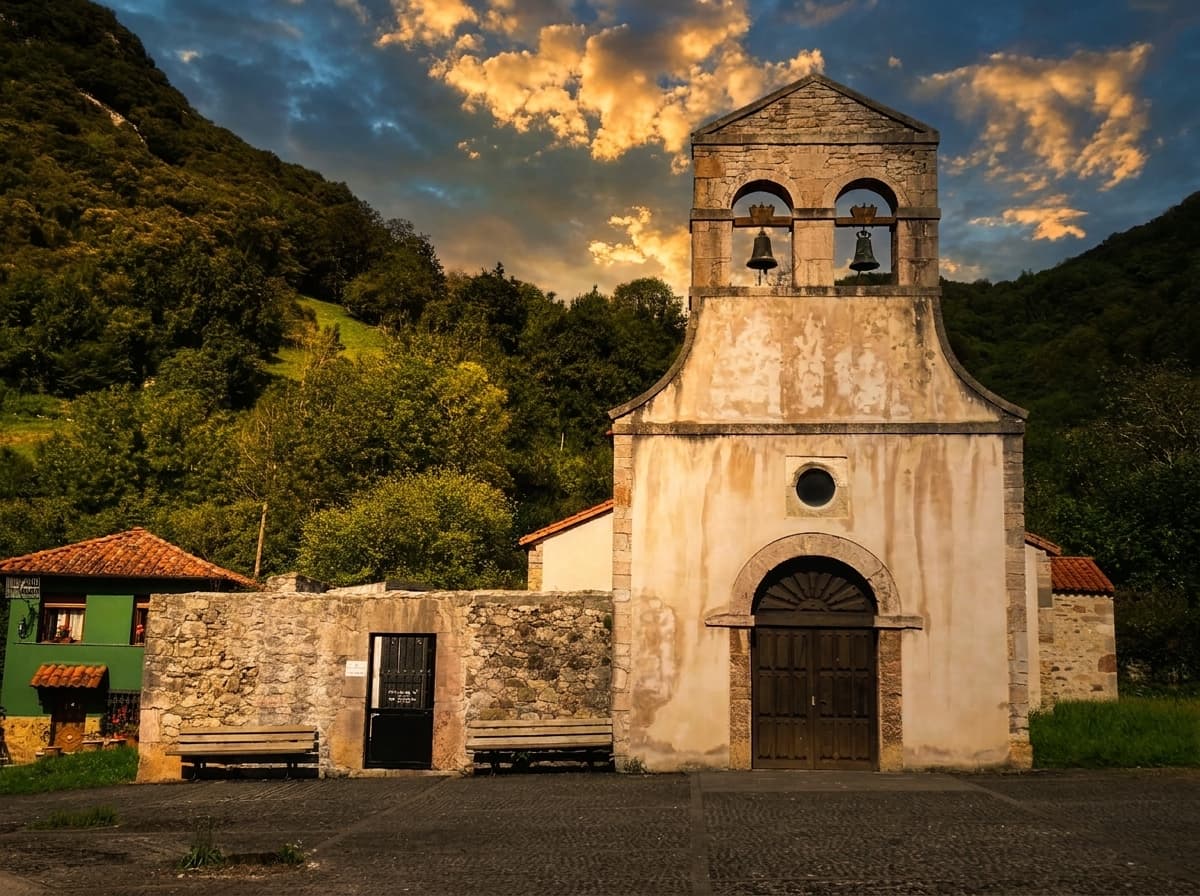
1. Collegiate Church of San Pedro de Teverga (11th c.): the jewel. Transitional Romanesque temple, one of the best preserved in Asturias. Later Baroque altarpieces. Reduced opening hours, check before you go.
2. Casa del Oso (Proaza): interpretation centre with the story of Paca, Tola and Molina, the female bears who gave the trail its name. It also tells the recovery of the Cantabrian brown bear from near-extinction in the 1980s to more than 350 individuals today.
3. Prehistory Park of Teverga: faithful replicas of caves like Altamira, Tito Bustillo and other Cantabrian ones. For those interested in rock art who can’t access the originals.
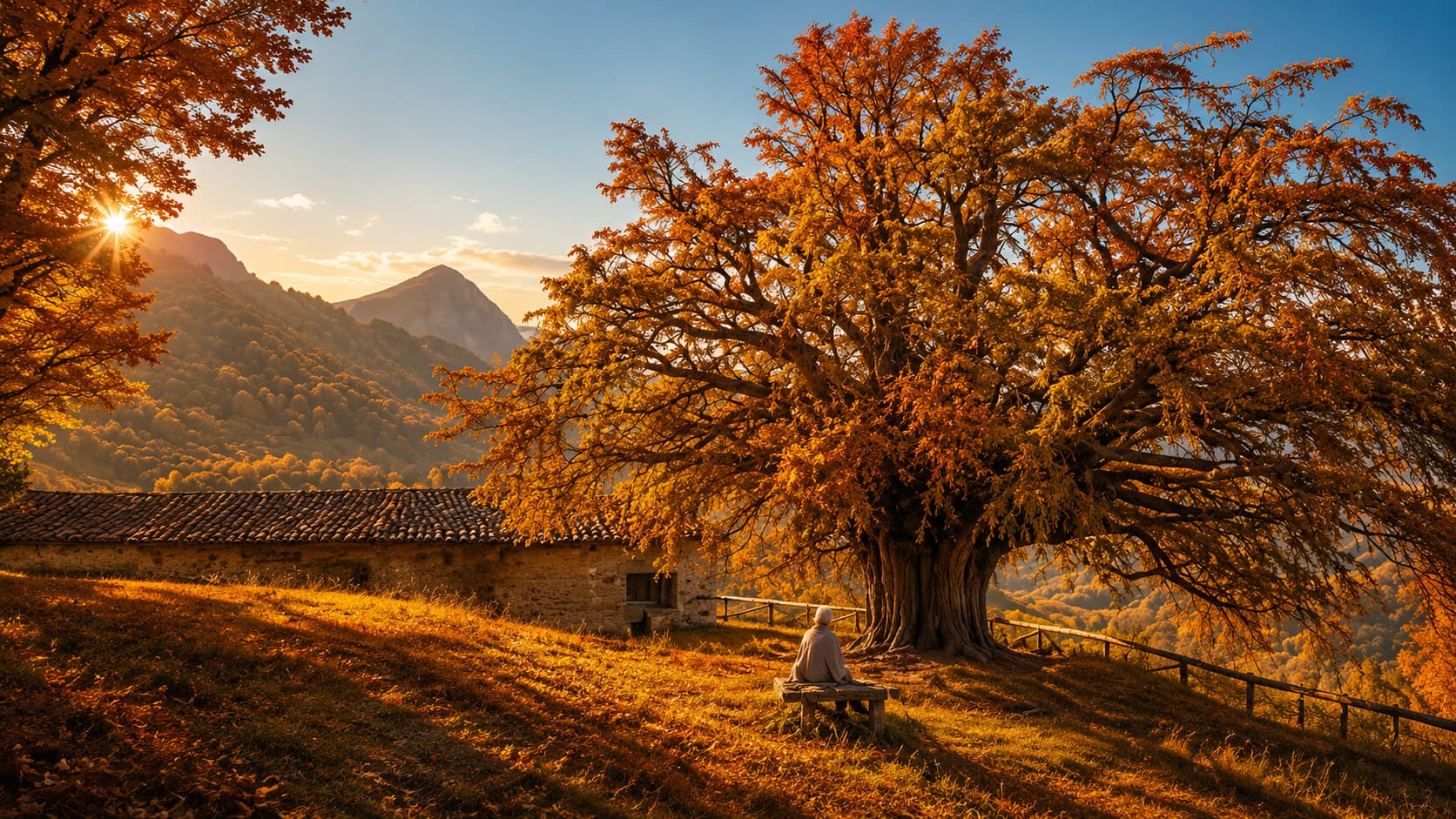
4. Bermiego Yew (Quirós): monumental tree. Between 1,500 and 2,000 years old. Declared Natural Monument. It grows in the Bermiego cemetery and has become a symbol of the council.
Heritage by council
If you want to go beyond the 4 essentials, here is the breakdown by territory:
Teverga
- Collegiate Church of San Pedro de Teverga: 11th-century Romanesque, valuable altarpieces. The most relevant architectural piece in the area.
- Prehistory Park: modern museum with rock art replicas. One-hour visit, ideal with kids.
- Huerta Cave: Paleolithic site with original rock art. Guided visits with booking.
- Villanueva: small village with old manor houses, chapels and preserved medieval layout.
Proaza
- Casa del Oso: interpretation centre on the Cantabrian brown bear next to Molina’s enclosure.
- Church of San Martín: elegant and simple Romanesque, example of Asturian rural church.
- Medieval Tower of Proaza: vestige of the seigneurial past. Panoramic view of the valley.
Santo Adriano
- Camín Real de la Mesa Interpretation Centre: tells the story of the Roman road across the Cantabrian range, one of the oldest trade routes in northern Iberia.
- Hórreos and paneras: traditional Asturian agricultural architecture. Especially well preserved in the small villages.
Quirós
- Quirós Ethnographic Museum: Asturian rural life in the 19th-20th centuries. Tools, photographs, kitchen and dwelling recreations.
- Archaeological sites: remains from the Iron Age and Roman period.
- Old ironworks and mills: pre-industrial heritage, even older than the mining railway.
- Teitos: traditional thatched pastoral shelters in the high pastures.
- Bermiego Yew: millenary monumental tree.
Traditional architecture: what to look at as you pass
If you are staying two or three days in the area, it helps to know what you are looking at when you pass through villages:
Manor houses and small palaces (Teverga): 17th and 18th century buildings with stone facades, wooden gates and coats of arms above the door. They are the mark of the hidalgo families who dominated the valleys before industrialisation.
Houses with painted balconies (Proaza): Arab-tile roofs, painted wooden balconies, whitewashed facades. Very typical of central Asturias.
Hórreos and paneras (Santo Adriano and Quirós): hórreos are square buildings raised on four pegollos (pillars) used to store grain protected from damp and rodents. Paneras are the rectangular, larger version with more pegollos. They are the architectural icon of Asturias and you will see them by the dozen here.
Teitos (high pastures of Quirós): pastoral shelters with stone walls and thatched roofs of broom-grass. Few originals remain in use, but several have been restored as ethnographic heritage.
The museums worth the ticket
Four stops that justify the price (between €3 and €8) and the hour they take:
Casa del Oso (Proaza): to understand why the trail is called what it is. A must if you come with kids or if you have never heard of Paca and Tola.
Prehistory Park (Teverga): if you are interested in rock art and can’t visit Altamira or Tito Bustillo, this is your best option. Replicas built with scientific technique.
Quirós Ethnographic Museum: 19th-20th century Asturian rural life. Gives context to what you are seeing in the villages.
Camín Real de la Mesa Interpretation Centre (Santo Adriano): for those who want to understand that this area was a Roman and medieval corridor, not an isolated place.
How to combine heritage with cycling
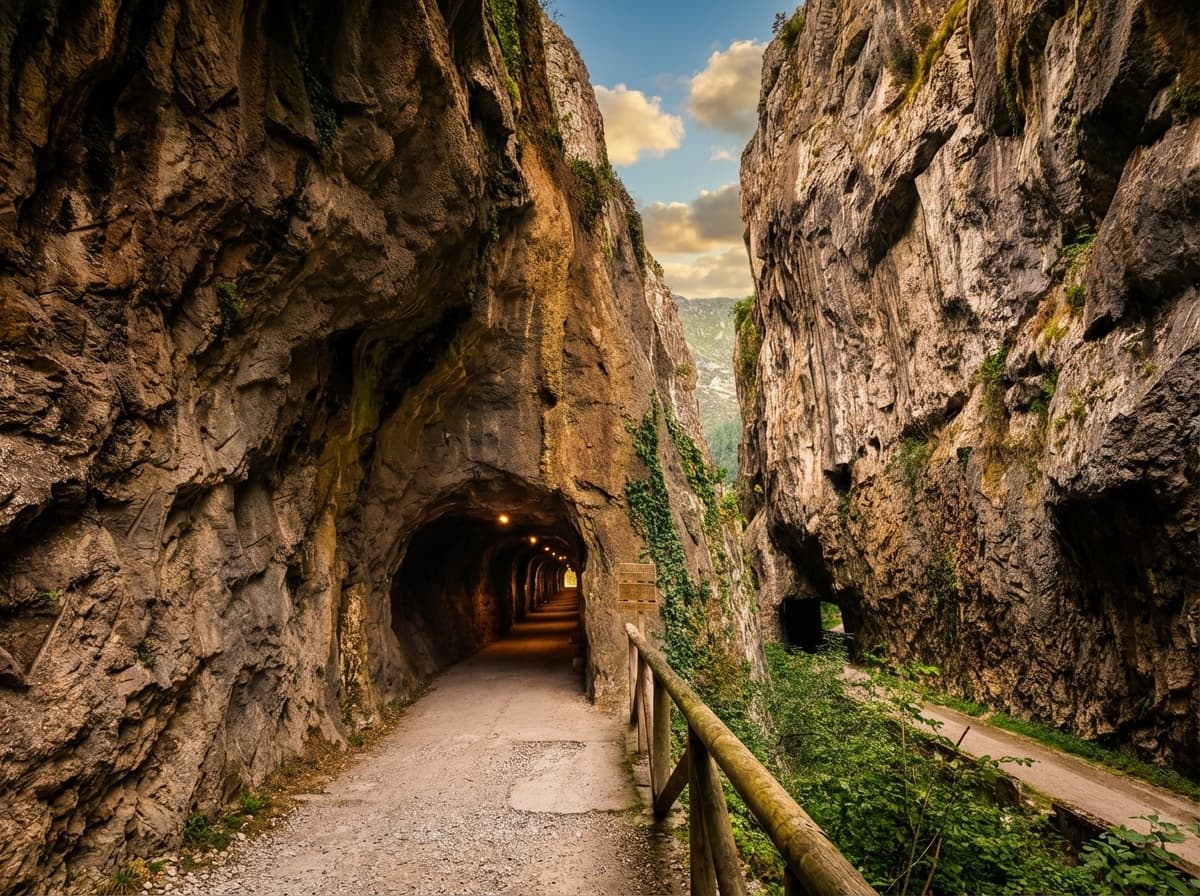
Cycling the standard trail (18 km, ~2:30 h one way) you can make heritage stops without big detours:
- Km 0 (Entrago): starting point, old converted train station (ours).
- Km 9 (Caranga de Abajo): junction between the two branches of the trail.
- Km 15 (Proaza): essential stop at the Casa del Oso + Molina’s enclosure. 30-45 min.
- Km 18 (Buyera): end of the standard route, with the Fernanchín bear enclosure right next to the trail.
- If you extend towards Tuñón and Trubia, you enter a more urban scene.
For the Collegiate Church of San Pedro or the Prehistory Park, separate visits by car from Teverga centre (La Plaza), 5-10 minutes from Entrago.
The Bermiego Yew is in Quirós, 25 minutes by car from Entrago, best done in an afternoon combined with the Ethnographic Museum.
To get more out of the trip
Three practical tips:
- Check opening hours before coming: the Collegiate Church of San Pedro, Huerta Cave and some centres have reduced opening, especially off-peak. Call or check at the tourist office in Teverga (La Plaza) or Proaza.
- Book the Huerta Cave: very limited capacity, guided tours fill up on holidays and summer.
- Ask at your rural guesthouse: many have recommendations for local guided visits that are not online. The locals are the best guide.
Starting from the bike?
The most practical plan is to rent the bike in Entrago, cycle the trail (with a Casa del Oso stop) and dedicate another day to heritage visits that require a car (Collegiate, Prehistory Park, Bermiego Yew). It is the smoothest way to combine both.
We have been in Entrago for 20 years and we know the real opening hours and the corners that don’t appear in guides. If this kind of plan interests you, mention it when you pick up the bike and we’ll point you in the right direction.