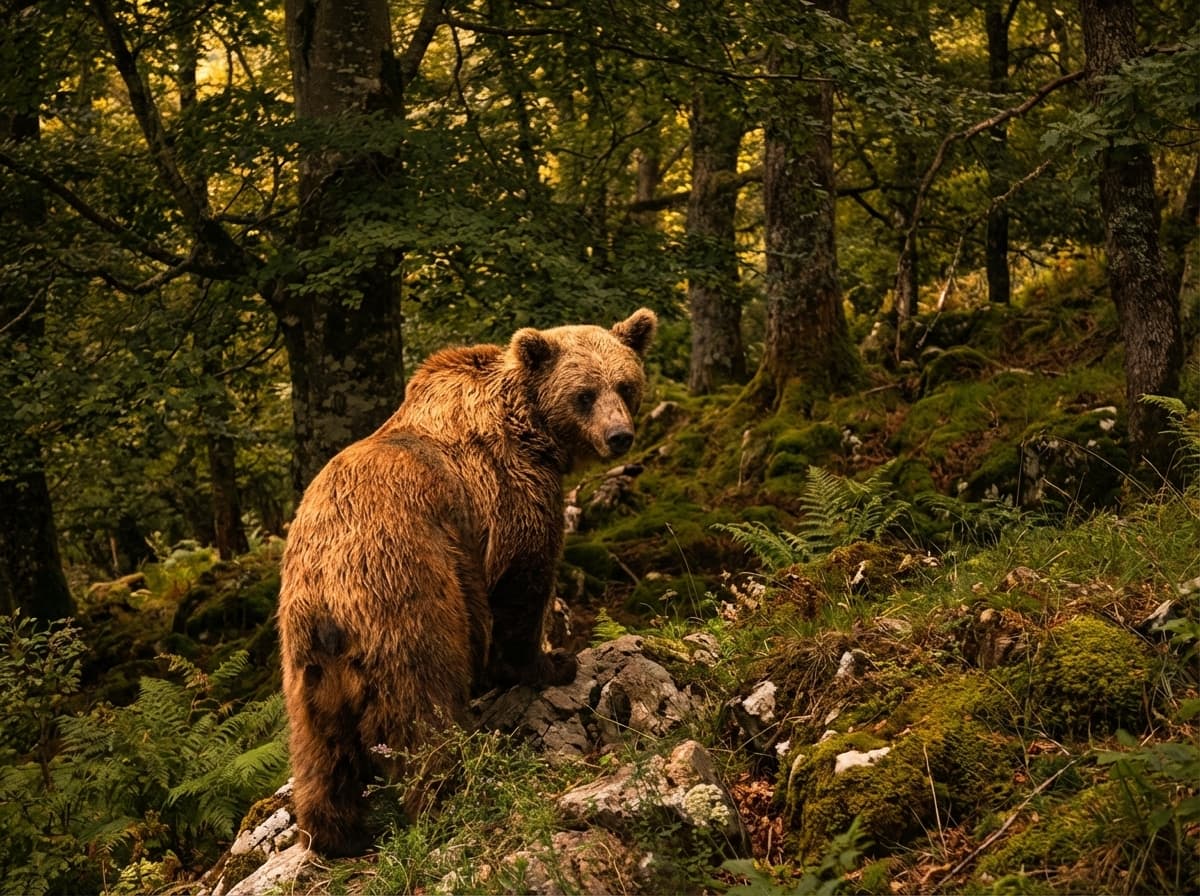
On 26 May 1996, two orphaned Cantabrian brown bear cubs entered the Fernanchín enclosure in Proaza. They were named Paca and Tola, and lived there until their deaths: Tola in 2018 and Paca on 10 April 2025. Their arrival cemented the commercial name “Senda del Oso” (Bear Trail) and turned the Asturian greenway into the most visited in northern Spain.
This is their full story, with verified dates and the link to the present situation (Molina, the bear who lives in the same enclosure today).
The rescue and the arrival (1996)
In early 1996, a litter of Cantabrian bear cubs was orphaned after their mother died, a common case back then, when the Cantabrian population was almost extinct (fewer than 70 individuals).
Two of the cubs, originally named Selva and Charli, were rescued and taken to the Fernanchín enclosure, a semi-wild facility set up by the Fundación Oso de Asturias between the councils of Proaza and Santo Adriano.
Official date of arrival: 26 May 1996.
After they arrived and the media coverage they generated, the public-facing names became Paca and Tola: catchier, easier to remember, names that would carry the story of the Cantabrian brown bear’s recovery for nearly 30 years.
The Fernanchín enclosure
40,000 m² of semi-wild ground right next to the trail. Wooded terrain with shelters, drinking troughs and a high zone visible from the outside viewpoint. Run by the Fundación Oso de Asturias with permanent keepers.
From the free public viewpoint, visible from the Bear Trail itself, visitors can watch the bears without disturbing them. There is no direct contact and no indoor visits: these are protected animals, not zoo animals.
The enclosure sits at roughly km 18 from Entrago if you ride the bike route, and 1 km from the centre of Proaza on foot or by car.
The effect on the greenway
The name “Senda del Oso” became commercial after the bears arrived. Before 1996 the route was known locally as “the mining train track” or “the Trubia route”, descriptive names with no tourist appeal.
From 1996 onwards, “Senda del Oso” took hold. First because of geographic proximity to the enclosure, then by direct association with Paca and Tola. Media outlets, guidebooks and brochures all picked up the name, and within a few years the greenway became the most visited in northern Spain, with tens of thousands of visitors a year.
Paca and Tola’s lives in the enclosure
Almost three decades together. Key facts:
- Species: Ursus arctos arctos (Cantabrian brown bear, European subspecies).
- Life expectancy in the wild: 20-30 years.
- Life expectancy in semi-wild conditions: can exceed 30.
- Adult weight: females 85-180 kg; males 100-260 kg.
- Behaviour: active at dawn and dusk, resting at midday.
During the first years they received special care (they were cubs). Later they settled into a natural rhythm: mixed diet (fruit, nuts, honey, occasional meat), distance observation by keepers, periodic health checks.
Neither bred inside the enclosure (that was not the goal: they were animals for educational conservation, not captive breeding).
Tola’s death (2018)
Tola died in 2018, after more than 20 years in the enclosure. Natural cause linked to old age. The news was reported in national and regional media. Tola and Paca had become public reference points for the Cantabrian bear’s recovery.
Paca was on her own for a few years (until Molina arrived).
Molina arrives (2013)
Molina is a brown bear rescued in 2013 who joined the enclosure. She had been found orphaned, a similar case to Paca and Tola, a litter without a mother.
Since then she has shared the enclosure with Paca, and after Tola died in 2018, Paca and Molina lived together until 2025.
Molina is now the only active bear in the enclosure, visible from the viewpoint right next to the trail, and the current symbol of the Bear Trail.
Paca’s death (10 April 2025)
Paca died on 10 April 2025, after almost 29 years in the enclosure. Natural cause linked to age: she was one of the oldest captive bears on record in Spain.
Her death closes the chapter of the two cubs who arrived in 1996. The name “Senda del Oso” remains, however. And Molina is now the bear of the enclosure, holding the same symbolic role Paca and Tola held for three decades.
What’s left today
Molina is still active in the Fernanchín enclosure. Free, open access from the viewpoint. Best viewing times: early morning and late afternoon.
In parallel, the Fundación Oso de Asturias continues its conservation work in the wild:
- More than 350 Cantabrian brown bears in the Cantabrian range today (estimate).
- Active monitoring, anti-poaching surveillance and environmental education programme.
- The Casa del Oso in Proaza is the visitor centre that explains all this work.
Paca and Tola’s legacy goes beyond the enclosure: they put the Cantabrian bear in front of the wider public and helped the species’ recovery succeed.
How to see Molina
It’s very simple. The Fernanchín viewpoint sits right next to the trail, between Proaza and Santo Adriano. Free open access, no ticket booth, no opening hours.
- By bike: km 18 from Entrago on the Bear Trail.
- On foot: from Proaza, 1 km along the trail to the viewpoint.
- By car: park in Proaza or Buyera, walk along the trail to the viewpoint.
With a bit of patience and quiet you’ll almost always see her. If she doesn’t appear at first, come back in 15-20 min. She shifts position throughout the day.
Our advice
“Start at the Casa del Oso before going to the viewpoint”. You build context in 1 h and then see Molina with different eyes: you understand what she eats, why she’s there, how the recovery happened. It changes the visit.
“Don’t make noise or throw food”. This is protected wildlife area. Anything that disturbs the animal’s natural behaviour is a fine and, worse, harms her.